How much does a custom pivot door cost in 2026? The answer depends on more than the door itself. A typical custom system may cost between $4,000 and $15,000. Premium projects can exceed $25,000. Size, material, glass, hardware, finish, and installation shape the final figure.
Door industry consultant Michael R. Allen says, “A pivot door is priced as a complete system, not as a simple slab.” That distinction matters. The pivot box, concealed hardware, frame, weather seals, and site preparation can change the budget quickly. A 48-inch steel door with laminated glass needs different engineering than a 36-inch timber door.
This guide explains how to calculate each cost before requesting quotes. It considers manufacturing, delivery, labor, taxes, and possible structural changes. Local installation rates also matter. A remote project may require special transport or a second installation visit.
The honest answer is less tidy.
Homeowners often compare door prices without comparing specifications. That creates misleading savings. A low quote may exclude finishing, threshold work, or adjustment after installation. Those missing details can add thousands of dollars.
We will examine realistic 2026 pricing examples, useful formulas, and common estimating mistakes. You will also learn which upgrades provide visible value, and which ones quietly inflate the budget. Keep a contingency reserve of 10% to 20%. Custom work rarely follows the first estimate perfectly.
Define the Door Size, Design, and Performance Requirements
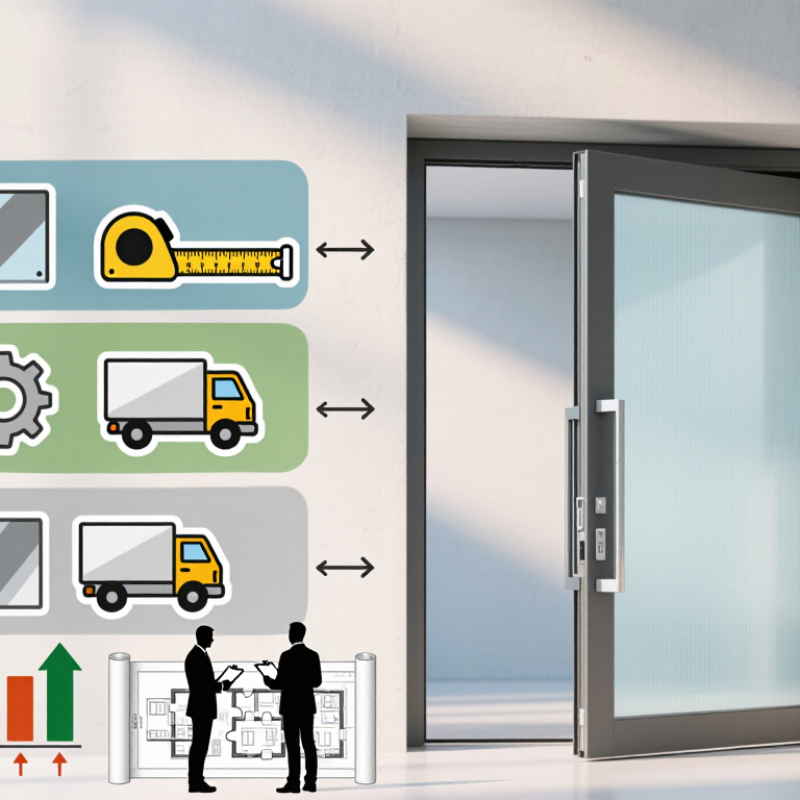
Calculating a custom pivot door cost in 2026 starts with a clear definition of the opening. Measure the finished wall opening, not only the existing door slab. Record width, height, wall thickness, floor level, and the swing area. A 1,200 mm wide door may require stronger hardware than a standard interior unit. That difference affects engineering, installation, and delivery costs.
Keep the design practical. A solid timber face, concealed frame, glass panel, or metal finish each changes material and labor requirements. Specify the handle position, threshold detail, frame color, glazing type, and desired automation before requesting quotes. Performance also matters. Consider wind exposure, water resistance, acoustic control, thermal insulation, security, and fire-rated construction where applicable. These requirements should be written into the quotation, not discussed casually.
Small details become expensive later.
In my experience, site access is often underestimated. Narrow stairs, limited parking, or a distant installation floor can increase labor time and lifting costs. A carefully measured door can still exceed the budget if the surrounding wall needs reinforcement. I have also seen attractive designs fail because the pivot point was selected too close to a cabinet or return wall. Leave enough clearance for seals, hardware adjustment, and daily use. A reliable estimate should separate the door, frame, hardware, finishing, transport, installation, and possible structural work. Allowing a realistic contingency is sensible, although the exact percentage depends on site conditions.
Break Down Materials, Glass, Hardware, and Finish Costs
How to Calculate Custom Pivot Door Cost in 2026?
Break Down Materials, Glass, Hardware, and Finish Costs
In 2026, a custom pivot door may cost between $4,000 and $15,000 before installation. The door material creates the widest price difference. Solid hardwood usually costs more than engineered wood or thermally broken aluminum. A large, thick slab also requires stronger internal support. Measure the opening carefully. A small error can create expensive fabrication changes.
Glass adds another layer of cost. Clear insulated glass may cost $500 to $1,800, depending on size and performance. Laminated or low-emissivity glass costs more, but it can improve safety, comfort, and energy control. Decorative textures increase labor because installers must align the pattern precisely. Do not estimate glass from width alone. Height, edge treatment, and frame depth matter too.
Hardware often costs $400 to $1,500. The pivot set must match the door’s weight, width, and daily use. Oversized doors need better load capacity and careful floor reinforcement. Finish costs can range from $300 to $1,200. Hand-applied stains, powder coating, or unusual colors require more preparation. Installation may add $800 to $3,000, especially when the wall or threshold needs adjustment. My early estimates were often too low because I ignored delivery access and site preparation. That mistake is easy to repeat. Request an itemized quote covering materials, glass, hardware, finish, delivery, installation, and possible structural work.
How to Calculate Custom Pivot Door Cost in 2026?
Estimated cost breakdown for a standard custom pivot door measuring approximately 3 ft × 8 ft in the U.S. market.
In 2026, the total cost of a custom pivot door commonly falls between approximately
$5,300 and $15,500. Door materials, specialty glass, pivot hardware, and finishing account for most of the product cost, while fabrication, installation, and delivery can significantly affect the final price. These figures are general U.S. market estimates and vary by size, design complexity, location, and installation requirements.
Calculate Manufacturing, Customization, and Engineering Charges
How to Calculate Custom Pivot Door Cost in 2026?
A custom pivot door quote should begin with manufacturing costs, not appearance alone.
Measure the opening, wall thickness, door height, and finished floor level accurately. A small measurement error can affect frame production and installation.
Manufacturing charges usually include the slab, frame, pivot hardware, seals, machining, finishing, and factory assembly.
Material choice changes the price quickly. Solid timber, insulated metal, laminated glass, and composite panels require different fabrication methods. Larger doors may need reinforced cores and stronger pivot sets. Ask whether delivery, protective packaging, and installation are included.
Customization adds labor and risk.
Bespoke finishes, concealed closers, unusual handles, curved edges, and special color matching often require extra drawings and production time. Engineering charges cover load calculations, hinge positioning, structural support, drainage details, and coordination with the surrounding wall. These services are especially important for tall or heavy doors. Do not treat them as optional decoration.
A practical estimate can use this structure: manufacturing cost, customization labor, engineering fees, installation, transport, and a contingency allowance.
Ten to fifteen percent may cover design changes or site adjustments. My early estimates were often too optimistic because I ignored floor tolerances and access restrictions. That mistake taught me to inspect the site before confirming any price. Require itemized drawings and written assumptions. Numbers need evidence. A reliable quote should show what changes when dimensions, materials, or hardware change.
Add Installation, Delivery, Taxes, and Regional Labor Expenses
A custom pivot door cost in 2026 depends on more than the slab, frame, and hardware. Installation, delivery, taxes, and regional labor can significantly change the final invoice. A useful estimate starts with the door package, then adds each local expense separately.
Installation often costs 15% to 30% of the door price. Complex walls, oversized panels, and structural reinforcement increase labor time. A two-person crew may need a full day for alignment, sealing, and hardware adjustment. Ask whether the quote includes removal of the old door and interior trim repairs. Small exclusions become expensive later. Delivery also varies by distance, weight, and access conditions. A narrow street or stair carry may require special handling. Confirm whether unloading is included.
Taxes depend on your location and the taxable parts of the project. Some areas tax materials but treat labor differently. Regional labor rates may range widely between metropolitan and rural areas. Request a written labor rate, estimated hours, travel charges, and permit-related fees. Keep a contingency of 10% to 15% for concealed framing damage or measurement corrections. I have found that early site verification prevents many disputes, although it cannot eliminate every surprise. Compare itemized quotes, not just the advertised door price. A cheaper offer may exclude delivery, finishing, or final adjustment.
How to Calculate Custom Pivot Door Cost in 2026? - Add Installation, Delivery, Taxes, and Regional Labor Expenses
Estimated Custom Pivot Door Cost Scenarios for 2026
All figures are planning estimates in U.S. dollars for a single custom pivot door. Final pricing depends on engineering, site conditions, local tax jurisdiction, shipping distance, and selected materials.
| Region |
Door Size |
Door Construction |
Product Cost |
Installation and Logistics |
Tax and Total |
| Custom Door |
Glass |
Hardware |
Finish |
Labor Rate |
Install Hours |
Delivery + Site Prep |
Pre-Tax Subtotal |
Tax Rate |
Estimated Tax |
Estimated Total |
| Northeast Metro |
48 × 96 in |
Thermally improved aluminum |
$6,800 |
$850 |
$650 |
$500 |
$120/hr |
20 |
$1,100 |
$12,300 |
8.875% |
$1,091.63 |
$13,391.63 |
| South Central |
48 × 96 in |
Thermally improved aluminum |
$6,200 |
$700 |
$550 |
$400 |
$85/hr |
20 |
$750 |
$10,300 |
8.25% |
$849.75 |
$11,149.75 |
| Southeast Coastal |
60 × 96 in |
Fiberglass composite |
$7,400 |
$900 |
$700 |
$550 |
$95/hr |
20 |
$850 |
$12,300 |
7.50% |
$922.50 |
$13,222.50 |
| Pacific Northwest |
48 × 108 in |
Clad wood construction |
$7,200 |
$1,100 |
$700 |
$650 |
$115/hr |
20 |
$1,100 |
$13,050 |
9.10% |
$1,187.55 |
$14,237.55 |
| Midwest |
42 × 96 in |
Insulated steel construction |
$5,600 |
$650 |
$500 |
$350 |
$80/hr |
20 |
$650 |
$9,350 |
7.25% |
$677.88 |
$10,027.88 |
| Mountain Region |
54 × 108 in |
Thermally improved aluminum |
$7,800 |
$1,000 |
$700 |
$600 |
$110/hr |
20 |
$950 |
$13,250 |
8.10% |
$1,073.25 |
$14,323.25 |
Calculation method: Estimated Total = Custom Door + Glass + Hardware + Finish + Installation Labor + Delivery and Site Preparation + Estimated Sales Tax. Installation labor is calculated as the regional hourly rate multiplied by 20 on-site hours. Tax rates are representative planning rates and should be replaced with the exact local rate before purchase.
Estimate the Total 2026 Cost and Compare Available Options
How to Calculate Custom Pivot Door Cost in 2026?
A custom pivot door usually costs about $8,000 to $25,000 in the United States.
Large openings, oversized glass, and premium finishes can push the price higher. My first estimate is rarely right. Site conditions often change the final number.
Separate the budget into four parts: door construction, hardware, installation, and structural preparation.
A typical door may cost $4,000 to $12,000.
Pivot hardware can add $800 to $2,500.
Professional installation often ranges from $1,500 to $5,000.
Moving electrical lines, repairing framing, or correcting uneven floors may add several thousand dollars.
The 2024 Remodeling Cost vs. Value Report places upscale entry-door replacement near $11,000 nationally.
That figure is a useful benchmark, not a custom pivot-door quote.
Compare options by performance, not appearance alone. Thermally improved glass may cost more but reduce heat transfer near sunny entrances. Steel offers strength, while engineered timber provides a warmer visual character.
RSMeans Data 2025 shows that construction pricing varies substantially by city, labor market, and project access. Urban delivery can be expensive. Narrow stairways can be worse.
Request three itemized estimates with measurements, finish samples, warranty terms, and installation details. Leave a 10% to 15% contingency for hidden conditions. It may feel excessive, but renovation surprises are common.
Conclusion
Estimating a custom pivot door cost in 2026 begins with defining the door’s dimensions, opening configuration, design style, energy performance, security features, and weather-resistance requirements. The budget should then account for materials such as aluminum, steel, wood, or composite panels, along with glass type, hinges, locks, handles, seals, coatings, and other finish options. Each selection can significantly affect the final price, especially when larger sizes, specialty glazing, or upgraded hardware are required.
How much does a custom pivot door cost in 2026? The answer depends not only on the product itself but also on customization, engineering, fabrication complexity, delivery, installation, taxes, and regional labor rates. A reliable estimate should separate manufacturing and design charges from site-related expenses, then compare different material, performance, and installation options. Reviewing these cost categories together helps homeowners and project planners create a realistic budget and choose a pivot door that balances appearance, durability, performance, and long-term value.

 ScotiaFire Doors