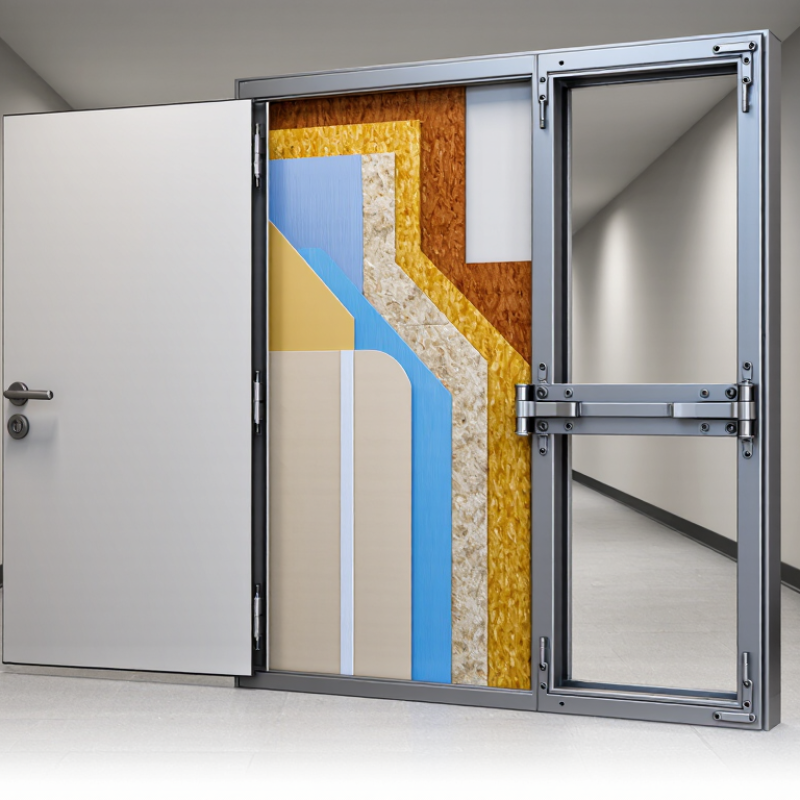
A fire-rated door can look solid and reassuring, yet its hidden core may determine how it performs when heat reaches the corridor. Why does the infill material matter in a fire-rated door? Because the core affects heat transfer, structural stability, and the door’s ability to remain within its tested assembly. Mineral-based cores, gypsum products, and other infills are not interchangeable upgrades. Their performance depends on the door design, frame, hardware, seals, and test evidence. Small details matter.
Lori Greene, an Allegion code consultant and fire-door educator, emphasizes a practical principle: a fire door is a tested assembly, not a set of parts that can be freely swapped. That principle should guide material selection. Check the door manufacturer’s documentation, listed fire rating, permitted core options, and installation requirements before comparing price or weight. A dense core may feel reassuring, but density alone does not prove fire performance. Nor does a familiar product name. The evidence must match the exact door configuration.
This guide explains how to compare infill materials, what questions to ask suppliers, and which details deserve closer inspection. Look beyond a sample cutaway. Confirm compatibility with glazing, latches, hinges, and smoke seals. Requirements can vary by application and jurisdiction, so verify the approved specification with qualified professionals. One caution: product descriptions can sound more certain than the available test data. Choosing well means checking the records, not guessing from appearance.
Understanding Fire-Rated Door Requirements and Applicable Codes
Fire-rated door requirements depend on the building’s location, occupancy, and the wall opening it protects. Adopted building and fire codes set the required rating, while product standards define how assemblies are tested. A door is not rated by its infill alone. The leaf, frame, glazing, seals, hinges, latch, and installation must match an approved, tested assembly. Details matter. Before choosing infill, check the door label and listed documentation for permitted core materials, thicknesses, and limits on glazing or hardware. A change that looks minor can invalidate the rating.
Tips: Ask the project’s code official or qualified fire-door inspector which code edition applies. Compare the proposed infill with the door’s tested construction and listing. Do not guess. Keep the documentation with the project records.
Confirm the required rating duration and opening use against approved plans and local code. If the door is already installed, do not drill or cut it to test the core. Where records are unclear, request written guidance from the responsible inspector or design professional. It may slow selection, but guessing about a hidden infill is riskier.
Identifying Common Infill Materials and Their Properties
Common fire-door infills include mineral wool, gypsum-based cores, and engineered honeycomb cores. Mineral wool is noncombustible and fits tightly around internal stiffeners, but gaps can create weak points. Gypsum slows heat transfer as its chemically bound water is released during heating. The Gypsum Association’s GA-600 Fire Resistance Design Manual puts this water content at about 21% by weight. Honeycomb cores are light and economical, though their fire performance depends on the complete tested door construction. Not every “fire-resistant” core qualifies for every rating.
The label matters more than a material’s name. UL 10C tests door assemblies under positive pressure, while NFPA 80 covers their installation and inspection. Common labeled ratings include 20, 45, 60, and 90 minutes; these describe tested assemblies, not loose infill materials. Look for the door’s listing and confirm that its core, frame, glazing, and hardware match the approved configuration. A dense core may improve heat resistance, yet add weight and stress hinges. That trade-off is easy to miss. Cutouts, repairs, or replacement infill can also change performance, so check the listing documentation before specifying a material.
Comparing Fire Resistance, Insulation, Weight, and Moisture Performance
Choosing infill for a fire-rated door means assessing the complete door assembly, not just the core. Fire performance depends on tested construction, including the frame, seals, hardware, and installation details. Mineral wool can provide strong thermal resistance and is noncombustible, but its performance depends on density and how it is fitted. Gypsum-based cores may offer useful fire resistance, while honeycomb cores are often lighter but may provide less insulation. No single material wins every comparison. Details matter.
Thermal insulation affects heat transfer and comfort, but a higher insulation value does not automatically mean better fire performance. Weight matters too: a heavier door can place greater demands on hinges and the frame, especially with frequent use. Moisture is easy to overlook. In damp areas, absorbed water or repeated humidity changes may affect some core materials, edges, or adhesives. It is worth checking product test data for the intended conditions, not relying on a generic material description. Ask suppliers for documentation covering the exact door configuration, and confirm that the specified infill matches the tested assembly. That extra check can feel tedious. Still, swapping a core later is rarely simple.
Checking Compatibility with the Door Core, Frame, and Hardware
An infill is compatible only when it works within the complete fire-rated door assembly. The core, frame, seals, and hardware all affect performance. A material’s fire resistance alone does not establish that the finished door will perform as intended. That distinction matters. Check documentation for the specific door construction and rating, rather than relying on a generic material description.
Start with the core. Confirm the proposed infill matches its thickness, density, and fixing method. A heavier core can increase load on hinges and affect closing action. Check that the frame accommodates the door’s dimensions and required clearances. Seals must sit correctly along the edges, without being squeezed or left with visible gaps. Details matter. Hardware cutouts and fasteners can also disturb the core or seals, so confirm that the specified hinges, latch, closer, and other fittings suit the tested configuration.
Before ordering, compare the infill, frame, and hardware against the approved assembly records. Ask a qualified door specialist to review any substitution, especially if it changes weight, edge construction, or fixing locations. A small mismatch may look harmless during installation, yet affect how the door closes or seals. I would not assume that a material used successfully in one door is suitable for another; checking this early can prevent costly rework.
Verifying Certifications, Testing, and Installation Requirements
A fire-rated door is tested as an assembly, not as an isolated sheet of infill. Check that the certification covers the exact door construction, frame, hardware, and intended fire-resistance period. A certificate for a similar-looking panel may not apply. Read the scope carefully.
Review test reports and certification documents before selecting a material. Confirm the tested door size, core or infill type, thickness, and any temperature-rise limits. Ask whether the documents reflect the current product configuration, not an older version. Small details matter. If a report is unclear, request written clarification from the certifying body or the door manufacturer, and keep the response with the project records.
Installation must match the tested design. Check the specified clearances, edge sealing, fasteners, and orientation against the approved instructions. Even a suitable infill can fail to perform as expected if it is cut, compressed, or fitted with unapproved adhesives. That is easy to overlook on site. Before work begins, give installers the relevant drawings and confirm that substitutions require approval. Photograph concealed layers before the door is closed; those images can help resolve later questions, though they do not replace inspection or certification.
How to Choose Infill Material for Fire-Rated Doors
Common U.S. fire-protection rating durations for door assemblies
These rating durations are common in U.S. building-code applications; the required rating depends on the opening and applicable code. Choose an infill only when it is part of the door assembly’s certified listing and has been tested with that assembly. Verify the certification and test evidence, and install the door, frame, hardware, and infill according to the listing and applicable installation requirements. Reference: 2021 International Building Code, Table 716.1(1).
Conclusion
Choosing an infill material for a fire-rated door begins with understanding the required fire-resistance rating, applicable building codes, and the door’s intended location. Common options include mineral-based, gypsum-based, and other engineered core materials, each with different performance characteristics. Why does the infill material matter in a fire-rated door? It helps determine how effectively the door assembly can resist heat and fire, while also influencing insulation, weight, and performance in damp conditions.
The material must work with the door core, frame, seals, and hardware so the complete assembly functions as intended. Before selecting an infill, compare its fire resistance, thermal properties, weight, and moisture tolerance against the project’s needs. Finally, verify that the door assembly has suitable test evidence and certifications, and follow the specified installation requirements. A carefully matched and properly installed infill supports reliable performance without treating the material as a substitute for the tested door system as a whole.

 ScotiaFire Doors