China’s armored door industry serves residential, commercial, industrial, and infrastructure projects worldwide. These suppliers combine steel fabrication, security hardware, insulation materials, and finishing technology. Their products may protect entrances from forced entry, fire, noise, heat, or harsh weather. Performance depends on design, installation, and maintenance.
What is an armored door and how does it work? It is a reinforced door system designed to resist specific physical and environmental threats. A typical model uses a steel frame, reinforced leaf, multi-point locking system, hinges, seals, and protective panels. When closed, the locks engage with the frame at several points. This distributes pressure more effectively than a simple latch. Some doors also include fire-resistant cores, bullet-resistant materials, or acoustic layers. Features must match the project risk.
This article introduces China’s top 10 armored door suppliers and explains how they work. It considers manufacturing experience, product categories, testing documents, customization ability, export service, and quality control. Factory visits, sample inspections, and technical discussions can reveal details that catalogs often hide. A clean weld, accurate hinge alignment, and consistent powder coating matter in daily use. So does the supplier’s response after delivery.
Rankings are not permanent. Market data changes, and supplier strengths differ by application. A company known for hotel doors may not suit a bank entrance. Certifications should be checked with the issuing organization, not accepted blindly. Project drawings, test reports, warranty terms, and installation guidance deserve careful review. This practical comparison aims to support informed sourcing decisions, while recognizing that no door performs well when incorrectly specified or installed.
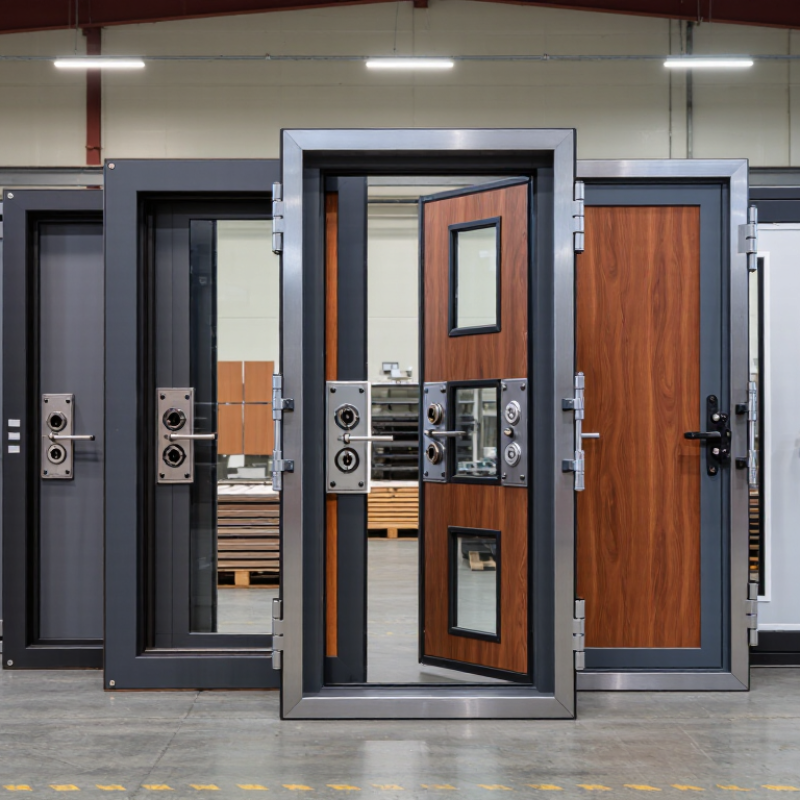
Armored doors are security doors built with a reinforced steel structure, a solid core, and protected locking points. In China, they are common in apartment buildings, villas, offices, warehouses, and utility rooms. Their purpose is practical: slow forced entry, reduce impact damage, and improve privacy. Some models also provide fire resistance, sound reduction, or better insulation, but these features require verified testing.
Manufacturers usually begin with measured drawings and a site survey. They select steel thickness, hinge type, lock configuration, seals, and surface finishes according to the opening and expected use. A reliable supplier should explain test reports, material grades, installation tolerances, and after-sales procedures. During production, workers weld or assemble the frame, fit the core, align the hinges, and check the door through repeated opening cycles. Small gaps matter. A poorly fitted door can weaken an otherwise strong structure.
In China, buyers often compare suppliers through samples, factory audits, and project references. The lowest quotation is not always the safest choice. One overlooked detail, such as a weak frame anchor, can cause trouble. Yet armored doors are not invincible, and marketing language can sound stronger than evidence. I would request clear performance data and inspect the installed doorway, not only the door leaf.
China’s top armored door suppliers begin with the building’s actual conditions. Engineers measure wall openings, floor levels, hinge positions, and local climate. They also ask how the door will be used each day. A residential entrance needs different protection from a warehouse or utility room. Design teams commonly use steel sheets, reinforced ribs, mineral cores, and adjustable locking systems. Every layer has a purpose.
Manufacturing starts with computer-controlled cutting and precise frame forming. Workers then weld internal reinforcement before installing insulation and hardware. Quality inspectors check panel thickness, weld continuity, surface flatness, and lock alignment. They may test repeated opening cycles and resistance to forced impact. The process sounds orderly. Real factories still face variation.
A small welding distortion can affect installation. Poor powder coating preparation may cause early corrosion. Experienced suppliers therefore inspect corners, seams, hinges, and drainage points by hand. They often produce a sample door before approving full production. Measurements are reviewed again. That extra step costs time, but it can prevent expensive site repairs. Some suppliers also adjust designs after installation feedback, although not every factory documents these lessons well. Buyers should request material certificates, test records, and clear maintenance instructions. A strong door is not only heavy. It must close smoothly, remain stable, and fit the surrounding structure.
China’s top armored door suppliers usually begin with the building’s risk profile, not a decorative panel. Steel remains the main structural material, often using galvanized or cold-rolled sheets. Stainless steel may protect exposed areas from moisture. Inside, rock wool or polyurethane foam improves insulation, but each option affects weight and fire performance.
A reliable door system combines a reinforced leaf, welded frame, and adjustable hinges. Many designs use multi-point locks, hardened strike plates, anti-drill shields, and concealed fixing points. Some doors include fire-rated cores, smoke seals, and intumescent strips that expand under heat. Glass panels require laminated or fire-resistant glazing. Small details matter. A strong lock can still fail when the frame is weak.
Suppliers normally test impact resistance, forced-entry resistance, corrosion behavior, and repeated opening cycles. Chinese projects may reference GB 17565 for security doors and GB 12955 for fire doors, while export projects often require ISO-based quality controls or local certification. Testing reports should identify the exact door model, materials, hardware, and installation method. A report for one configuration cannot automatically prove another.
In field inspections, installation is often the weak point. Poorly anchored frames, uneven floors, or careless seal fitting can reduce real protection. Thicker steel is not automatically safer. It may overload hinges and create alignment problems. I would also question vague claims such as “military grade” without measured test results, because practical security depends on the complete door system.
Armored door systems typically combine steel or stainless-steel skins, reinforced steel cores, aluminum components, laminated glazing, and mineral-wool insulation. The density values shown are standard engineering reference values rather than company-specific performance data. Security and fire performance are commonly evaluated against GB 17565-2022, EN 1627, UL 10C, and UL 752, depending on the project and target market.
China Top 10 Armored Door Suppliers: How Do They Work?
In China’s armored door market, suppliers differ sharply in customization, quality control, and production capacity. Custom work begins with drawings, wall measurements, hinge positions, lock layouts, and surface samples. Experienced suppliers confirm these details before quoting. Small errors can create large installation problems.
A reliable factory uses incoming material checks for steel sheets, cores, hinges, and locking components. Inspectors may measure sheet thickness with calipers and test weld points visually. Many plants also record door dimensions, coating results, and hardware batches. During a factory visit, ask to see rejected products, not only finished doors. That reveals how seriously the team handles defects. No supplier is perfect. A clean report can still hide weak sampling methods.
Production capacity requires more than a large workshop. Buyers should compare machine availability, worker skills, shift planning, and subcontracting control. A supplier making 300 doors monthly may offer closer attention than one promising 3,000 units. However, limited capacity can delay large projects. Request a realistic production schedule, inspection stages, packaging photos, and loading records. One practical test is ordering a prototype before mass production. Check its weight, frame alignment, closing force, finish consistency, and installation instructions. The result may expose unclear communication or design assumptions. That is useful evidence. Choose the supplier that explains problems clearly, documents changes, and can repeat the approved sample consistently.
| Anonymous Supplier Profile | Primary Production Model | Typical Product Scope | Customization Capability | Common Security / Fire Standards Supported | Quality-Control Practice | Indicative Monthly Capacity | Typical Lead Time | Export Readiness | Best-Fit Buyer |
|---|---|---|---|---|---|---|---|---|---|
| Supplier Profile 01 | Large-scale OEM production with standardized tooling | Steel security doors, apartment entrance doors, fire-rated doors, metal frames | High Custom sizes, skins, locks, glazing, finishes, and hardware packages |
GB 17565 security-door requirements; GB 12955 fire-door applications; EN 1627 testing may be available by project | Incoming steel inspection, welding checks, dimensional inspection, coating inspection, final functional testing | Approximately 8,000–15,000 door sets | 25–45 days for repeat designs; longer for new tooling | Strong container-loading and export-packing capability | Residential developers, distributors, and large project contractors |
| Supplier Profile 02 | Project-oriented manufacturer with engineering support | Armored entrance doors, blast-resistant assemblies, security partitions, access-control doors | High Engineering drawings, non-standard dimensions, reinforcement layouts, and access-control integration |
Project-specific testing against applicable Chinese, European, or North American requirements | Approved drawings, welding procedure control, assembly inspection, hardware traceability, site-support documentation | Approximately 1,500–4,000 door sets | 35–70 days, depending on engineering complexity | Good documentation support for tenders and international projects | Infrastructure, commercial, industrial, and government projects |
| Supplier Profile 03 | Mid-sized flexible factory focused on private-label orders | Steel security doors, villa doors, warehouse security doors, insulated metal doors | High Flexible colors, panel patterns, handle sets, locks, and packaging labels |
GB 17565 and selected fire-door configurations; certification depends on the final construction | Material certificates, weld-bead sampling, powder-coating thickness checks, door-leaf alignment testing | Approximately 2,000–5,000 door sets | 30–55 days | Experienced with mixed-SKU orders and consolidated shipments | Importers, online distributors, and regional building-material dealers |
| Supplier Profile 04 | High-volume residential door producer | Apartment security doors, fire-rated apartment doors, entrance doors, community-project doors | Medium Best suited to approved catalog sizes and repeat specifications |
Commonly configured for GB 17565 and GB 12955 applications where the complete assembly is tested | Batch sampling, automated cutting, standardized welding fixtures, coating-line inspection, packing checks | Approximately 12,000–25,000 door sets | 20–40 days for standard models | Efficient loading and standardized export cartons | Large residential developments and volume procurement programs |
| Supplier Profile 05 | Premium architectural-door workshop | Decorative armored doors, luxury villa doors, oversized pivot doors, wood-and-metal composite doors | High Custom veneers, decorative metalwork, concealed hinges, oversized leaves, and bespoke finishes |
Security and fire performance must be confirmed for each decorative construction | Mock-up approval, finish-board approval, dimensional inspection, hardware testing, and pre-shipment review | Approximately 500–1,500 door sets | 45–90 days | Strong photo documentation and protective export crating | Luxury residential, hospitality, and high-end commercial projects |
| Supplier Profile 06 | Security-specialist manufacturer | High-security doors, reinforced steel doors, detention-area doors, security windows, controlled-access doors | High Reinforcement levels, lock cases, vision panels, electronic locks, and frame anchoring |
Project-specific security classifications; UL 752, EN 1627, or local standards may apply where tested | Weld inspection, lock and hinge load testing, door-cycle testing, dimensional records, and traceable assembly records | Approximately 800–2,500 door sets | 45–85 days | Suitable for technical submittals and controlled project logistics | Industrial facilities, secure rooms, utilities, and institutional buyers |
| Supplier Profile 07 | Cost-optimized factory using standardized components | Entry-level security doors, steel apartment doors, utility-room doors, basic fire-door models | Medium Limited to selected dimensions, colors, locksets, and panel designs |
Basic Chinese-market configurations; performance depends on tested door construction and hardware | Supplier material checks, production-line inspection, visual finish inspection, and basic operation testing | Approximately 5,000–10,000 door sets | 20–35 days | Suitable for standard export orders with clear specifications | Price-sensitive distributors and standard housing projects |
| Supplier Profile 08 | Regional manufacturer with integrated frame and hardware production | Security doors, steel frames, fire-rated frames, emergency-exit doors, door hardware packages | High Frame profiles, thresholds, hinges, closers, locks, and coordinated hardware sets |
GB 12955 fire-door configurations; EN 1634 or EN 1627 testing may be available for qualified assemblies | Frame squareness checks, hardware fit checks, coating inspection, sample assembly, and final packing audit | Approximately 3,000–7,000 door sets | 30–60 days | Good for projects requiring coordinated doors and frames | Fire-safety contractors, commercial builders, and door-system distributors |
| Supplier Profile 09 | Export-focused OEM and contract manufacturing operation | Armored doors, fire doors, acoustic doors, insulated doors, and private-label door assemblies | High Private labeling, multilingual manuals, packaging specifications, and regional hardware options |
Standards selected according to destination market; test reports should be verified for the exact model | Pre-production samples, approved golden samples, batch inspection, carton-drop checks, and container-loading records | Approximately 2,500–6,000 door sets | 35–65 days | Strong export communication, labeling, and documentation processes | International wholesalers and multi-country distribution networks |
| Supplier Profile 10 | Small-batch custom fabricator | Non-standard armored doors, replacement doors, retrofit frames, unusual opening sizes, and restoration work | High Best suited to prototypes, low-volume custom work, and difficult site conditions |
Performance is normally assessed through project specifications and available test evidence | Drawing confirmation, manual dimensional checks, weld inspection, finish approval, and factory acceptance inspection | Approximately 200–800 door sets | 45–100 days | Export possible, but project coordination and packaging require more planning | Renovation projects, specialist contractors, and low-volume custom buyers |
Data note: The figures are anonymous industry benchmark ranges intended for supplier comparison. Actual capacity, certification, lead time, and performance depend on the specific door construction, test report, order quantity, hardware package, and production schedule. Certifications should be verified against the exact finished door assembly rather than the factory category alone.
Selecting a reliable Chinese armored door supplier starts with evidence, not attractive catalog images. Ask for factory registration, production photos, and recent project references. A serious supplier should explain steel grade, core material, hinge design, and lock testing in plain language. Request drawings with dimensions, swing direction, wall thickness, and installation tolerances. Details matter.
Review samples or inspect a live production line through a verified video call. Check weld consistency, door leaf flatness, gasket compression, coating thickness, and frame alignment. Ask how raw materials are traced from purchase to final inspection. Reliable factories usually provide inspection records, batch numbers, and a clear process for handling defects. Request third-party test reports relevant to fire, acoustic, forced-entry, or weather performance. One report is not enough if its scope does not match your project.
Communication reveals operational maturity. Send the same technical brief to several suppliers and compare their questions, lead times, packaging plans, and change-control procedures. A dependable partner confirms who approves drawings and who pays for corrective work. Never judge reliability from the lowest quotation alone. Extremely cheap pricing may hide thin steel, weak cores, or incomplete hardware. Still, references can be imperfect; projects change, and testimonials may be selective. Verify names, dates, delivery records, and installation feedback independently. Include a pre-shipment inspection and a small pilot order when possible. This may feel slower. It often exposes problems early.
Steel usually forms the main structure, often galvanized or cold-rolled sheets. Stainless steel can protect moisture-exposed areas. Rock wool or polyurethane foam may improve insulation, but each core changes weight and fire performance.
Look for a reinforced leaf, welded frame, adjustable hinges, and multi-point locking. Hardened strike plates, anti-drill shields, and concealed fixing points can add protection. A strong lock cannot compensate for a weak frame.
Fire-rated cores, smoke seals, and intumescent strips can slow heat and smoke movement. Intumescent materials expand when heated. Glass panels need laminated or fire-resistant glazing when included.
Request reports covering impact resistance, lawful security testing, corrosion behavior, and repeated opening cycles. Fire, acoustic, and weather tests may also matter. Reports should identify the exact model, materials, hardware, and installation method.
Not necessarily. Extra thickness may overload hinges and create alignment problems. A balanced system often performs better than a heavy door with poor installation.
Request factory registration, recent project references, production photos, and clear technical drawings. Check steel grades, core materials, hinge designs, and lock testing. Verify references independently, because testimonials may be selective.
Check weld consistency, door leaf flatness, gasket compression, coating thickness, and frame alignment. Ask how raw materials receive batch tracking. Small details matter.
Poorly anchored frames, uneven floors, and badly fitted seals can reduce real protection. Drawings should show wall thickness, swing direction, dimensions, and installation tolerances. The factory door may be sound, yet the installed result can disappoint.
Send the same technical brief to several suppliers. Compare lead times, packaging, change-control procedures, and corrective-work responsibilities. The cheapest quotation may hide thin steel or incomplete hardware. I would still allow for honest mistakes and verify every assumption.
This article explains what armored doors are, why they are widely used in residential, commercial, industrial, and institutional buildings in China, and how their internal structure supports security, durability, and daily convenience. The key question, “What is an armored door and how does it work?”, is answered by examining the combination of a reinforced core, protective steel layers, reliable locking mechanisms, durable frames, and optional insulation or fire-resistant components. These systems are designed to resist impact, improve privacy, and provide long-term performance when properly installed and maintained.
It also explores how leading Chinese suppliers design, manufacture, and test armored doors through material selection, precision production, quality inspections, and compliance with applicable standards. Suppliers may differ in customization options, production capacity, surface finishes, hardware configurations, delivery coordination, and after-sales support. For a successful project, buyers should compare technical specifications, factory capabilities, quality-control procedures, certifications, communication efficiency, and sample performance before choosing a dependable supplier.

ScotiaFire Doors