A 45 mm door can look substantial in a doorway, but thickness alone does not tell you how much sound it will block. Is 45mm thickness enough for a soundproof door? The honest answer is: sometimes, depending on the door’s construction, seals, frame, and installation. A solid, well-fitted door may reduce everyday speech and hallway noise, while a lightweight hollow-core door of the same thickness may let much more sound through. The number on a specification sheet is only one clue.
Small gaps matter. A thin line beneath the door can carry sound into a quiet room, even when the door itself feels heavy. The frame, hinges, perimeter seals, and threshold all affect the finished result. So does the type of noise: voices are different from deep traffic rumble or machinery vibration. No single thickness guarantees silence.
This guide offers five practical tips for judging whether 45 mm is suitable for your space. It looks at core materials, door weight, acoustic ratings, sealing details, and installation quality. Where possible, compare tested performance data rather than relying on thickness claims alone. Ask what was tested: the door slab, or the complete door set with its frame and seals? That distinction is easy to miss. It is also where expectations can go wrong. A thicker door may help, but it cannot fix a poorly sealed opening. The goal is realistic noise reduction, not a promise of total silence.
How Door Thickness Affects Sound Transmission
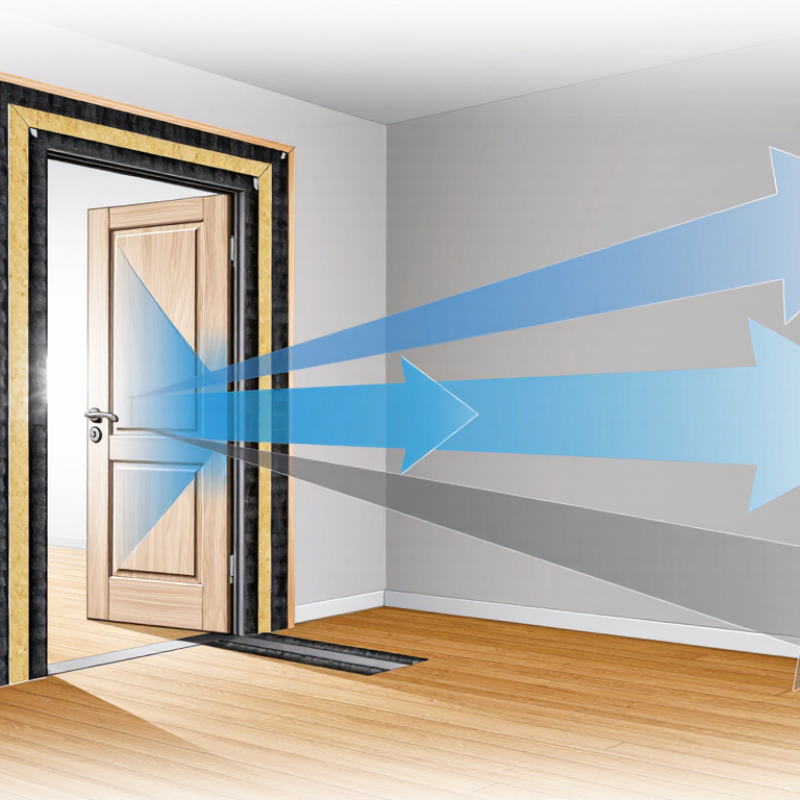
A 45mm door can reduce some noise, but thickness alone does not predict how quiet a room will feel. Sound transmission depends on the door’s mass, internal construction, stiffness, and how tightly it closes. A dense, solid-core leaf usually blocks more sound than a lightweight hollow door of similar thickness. Small gaps matter.
Sound can pass through a narrow opening around the frame or beneath the door, even when the panel itself is substantial. Check the perimeter seals and threshold, then look for loose hinges or an uneven gap. A simple test is to close the door and ask someone to speak at a normal volume from the other side. Listen near the edges, not only at the center of the panel. That is not a laboratory measurement, but it can reveal obvious leakage.
Lower-pitched sounds, such as a rumbling appliance, are harder to control than sharp voices or clicks. A thicker leaf may help, yet it will not fix sound traveling through a shared wall or ceiling. It is tempting to treat 45mm as a guarantee; I would treat it as one useful specification among several. The core, seals, frame, and installation all affect the result. A careful fit can sometimes matter more than a few extra millimeters.
What 45mm Thickness Can and Cannot Tell You
5 Tips Is 45mm Thickness Enough for a Soundproof Door?
What 45mm Thickness Can and Cannot Tell You
A 45mm door leaf gives you one useful measurement: its thickness. It does not tell you how much sound the complete door will reduce. Two doors with the same thickness can perform differently because their cores, skins, and internal construction vary. A dense, well-built leaf may block more sound than a lightweight one. Thickness alone is an easy detail to overvalue.
Look at the full assembly. Sound can pass through gaps around the frame, beneath the door, or between the frame and wall. Even a substantial leaf can disappoint if its seals barely touch the floor or jamb. Check whether the quoted acoustic rating applies to a tested door, frame, seals, and hardware together. Small gaps count. A rating for the leaf alone may not reflect what you hear at home.
Consider the room and the noise source, too. Low traffic rumble behaves differently from a sharp conversation, and a door cannot correct weak adjoining walls. In a practical inspection, look for an even perimeter seal and a threshold that closes the bottom gap. A strip of paper can reveal a loose seal, though it is not a sound test. I would still ask for measured performance data; 45mm sounds reassuring, but it leaves important questions unanswered.
Which Door Features Matter Beyond Thickness
A 45 mm leaf can still leak sound if its edges are poorly sealed. Door performance depends on the whole assembly: core, frame, seals, threshold, and installation. ASTM E90 laboratory reports measure sound transmission through a tested assembly, while ASTM E413 assigns its STC rating. So a thickness figure alone cannot predict the installed result. NRC Canada’s building-acoustics guidance also warns that flanking paths can weaken real-world isolation.
Check the core and the seals. A dense solid core generally blocks more sound than a lightweight hollow core, but perimeter compression seals matter too. A 3 mm gap beneath a 900 mm-wide door leaves about 27 cm² open. Tiny gap. Big leak. Add a close-fitting automatic drop seal at the bottom, and ensure the frame is firmly packed and sealed to the wall. Ask for a tested STC report for the complete door set, not just the panel. Compare ratings only when test conditions match. Honestly, even a well-rated door may disappoint if sound travels through a shared wall or ventilation duct. That detail is easy to overlook.
Five Tips for Improving a 45mm Door’s Soundproofing
A 45mm door can reduce noise, but thickness alone does not determine performance. Start by checking the gaps around its edges. A strip of light under the door or daylight beside the frame can let conversation pass through. Fit compressible seals around the jamb, and make sure the door presses evenly against them when closed. Small gaps matter.
Next, add an automatic drop seal or a well-fitted threshold to close the bottom gap. Adjust loose hinges and the strike plate so the latch pulls the door snugly into the frame. If the door feels light, consider adding a suitable dense acoustic layer to its room-facing surface. Check hinge capacity and clearance first; added weight can cause sagging or prevent smooth closing.
Finally, inspect the frame and nearby wall for cracks, unsealed trim, or openings around cables. Seal suitable gaps with an appropriate acoustic sealant, without blocking ventilation or necessary hardware. A door may still transmit sound through a thin wall, so listen from both sides after each change. The improvement can be noticeable, though it will not create a silent room. Fitting details are easy to overlook, and even careful work may need adjustment.
5 Tips: Is 45mm Thickness Enough for a Soundproof Door? — Five Tips for Improving a 45mm Door’s Soundproofing
| Tip |
Improvement |
What to Do |
Why It Helps |
Priority |
| 1 |
Check the door leaf and its rating |
Confirm whether the 45mm door is solid-core or hollow-core, and look for test data for the complete door assembly if a specific sound-reduction level is required. |
Thickness alone does not determine sound insulation. Construction, mass, seals, frame, and installation all affect performance. |
High |
| 2 |
Seal the sides and top |
Fit compatible compression seals around the head and jambs. Adjust them so they make continuous contact when the door is closed without preventing smooth operation. |
Small air gaps can let sound pass around the door, reducing the benefit of a heavier door leaf. |
High |
| 3 |
Close the gap at the bottom |
Install an adjustable drop seal or a properly fitted door sweep. Where appropriate, pair it with a level threshold that allows the seal to make contact. |
The floor gap is a common sound-leak path. A seal should close the gap without dragging or creating a trip hazard. |
High |
| 4 |
Improve the frame and installation |
Check that the frame is secure and aligned, the latch pulls the door firmly against its seals, and gaps around the frame are properly filled and finished. |
Sound can bypass the door through loose frames or unsealed joints, even when the door leaf itself is substantial. |
Medium |
| 5 |
Test the finished door |
Close the door and inspect the perimeter for visible gaps. Check that seals contact evenly, then compare sound levels on each side under consistent conditions. |
A simple inspection can reveal installation leaks. A controlled test or certified rating is needed for reliable performance figures. |
Medium |
Key point: A 45mm door may be suitable for some applications, but thickness by itself cannot confirm that it is “soundproof.” The complete door-and-frame assembly, its seals, and the quality of installation determine the result.
How to Assess Whether a 45mm Door Meets Your Needs
A 45mm door can reduce noise, but thickness alone cannot predict performance. Sound also escapes through loose seals, hollow cores, glazing, and gaps beneath the leaf. A visible strip of light under the door is a warning sign. I would not call any door “soundproof” without test results for the complete assembly.
Assess the noise you need to control. The World Health Organization’s 2009 Night Noise Guidelines for Europe recommend bedroom noise below 30 dB LAeq over eight hours for good-quality sleep. That’s an indoor target, not a door rating. Ask for laboratory sound-insulation results, such as an STC rating measured using ASTM E90 and classified under ASTM E413. Check that the tested door included its frame, seals, and threshold. A slab tested alone may not represent your installed door.
Tip: Close the door and inspect its edges. Check the weakest edge. Look for continuous compression seals and a tight threshold; even a small gap can undermine a heavier leaf. Compare the test rating with your actual noise source, then consider wall and window leakage too. One limitation: lab results may differ from a poorly fitted door at home, so installation quality deserves equal attention.
Conclusion
Is 45mm thickness enough for a soundproof door? It can help reduce noise, but thickness alone cannot predict how well a door will perform. The materials and construction inside the door, the quality of its frame, and gaps around the edges all affect how much sound passes through. A solid, well-built 45mm door with tight seals may perform better than a thicker door with a lightweight core or poor-fitting edges.
To improve a 45mm door’s soundproofing, check for gaps and add suitable perimeter seals and a door sweep, ensure the frame is firmly fitted, and consider improving the door’s core or adding an appropriate surface layer. Also limit sound leaks through nearby walls and other openings. To decide whether the door meets your needs, consider the noise level, how quiet the room needs to be, and the door’s overall construction—not just its thickness.

 ScotiaFire Doors