When considering soundproof doors, one key question arises: "Is 45mm thickness enough for a soundproof door?" The effectiveness of a soundproof door relies heavily on its design and build quality. A thicker door typically offers better sound insulation. However, the relationship between thickness and soundproofing is not always straightforward.
A 45mm thick door can reduce noise considerably, but it may not block all sounds. Factors such as material, seals, and installation play crucial roles in soundproofing. For instance, a solid wood door may perform better than a hollow core door, even with the same thickness. Additionally, the quality of the door frame and the type of sound—whether it is low-frequency or high-frequency—can affect overall performance.
This leads us to reflect on our choices. Is installing a standard 45mm thick door sufficient for your soundproofing needs? Homeowners often overlook details that make a difference. Sometimes, a thicker door is not the only solution. We must examine all aspects to achieve the desired sound reduction. This inquiry into thickness and effectiveness begs a deeper understanding of soundproofing principles.
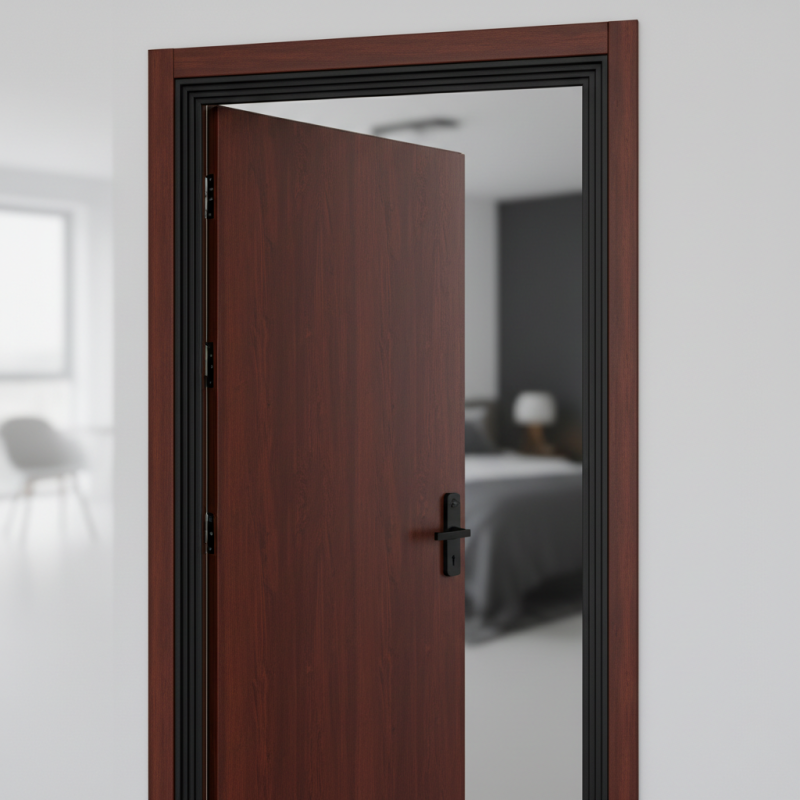
Factors Affecting Soundproofing Efficiency of Door Thickness
The thickness of a door plays a crucial role in soundproofing efficiency. A 45mm thick door can reduce sound transmission, but its effectiveness varies due to several factors. According to the National Institute of Standards and Technology, doors with greater mass generally offer better sound insulation. However, other characteristics also influence performance.
Material composition significantly impacts soundproofing effectiveness. Solid wood doors, for instance, provide better sound insulation compared to hollow-core doors. The density and type of material used can create various levels of acoustic barriers. Furthermore, seals and gaps around the door affect overall performance. Poorly fitted seals can allow sound to leak through, undermining the benefits of thickness.
Acoustic testing has shown that adding acoustic panels can enhance soundproofing. These panels absorb sound waves, reducing noise levels. While a 45mm door might not suffice alone for complete soundproofing, using complementary materials and proper installation techniques can bolster its effectiveness. It’s essential to analyze the specific requirements for each space. This ensures a tailored approach to achieving the desired sound isolation.
Soundproof Door Thickness Comparison
| Door Thickness (mm) |
Sound Transmission Class (STC) |
Material Type |
Weight (kg) |
Average Price ($) |
| 35 |
28 |
Solid Wood |
30 |
150 |
| 45 |
32 |
Steel |
40 |
200 |
| 50 |
36 |
Fiberglass |
35 |
250 |
| 55 |
40 |
Composite |
45 |
300 |
Standard Door Thicknesses and Their Sound Insulation Capacities
When considering soundproof doors, thickness plays a crucial role. Standard door thicknesses typically range from 35mm to 45mm. A 45mm thick door, while more robust than standard options, may not fully meet higher sound insulation needs. The material and construction matter just as much as thickness.
Sound insulation relies on mass, density, and the type of materials used. For instance, a solid core door, even at 45mm, may offer better soundproofing than a hollow core. Door seals and frame constructions also influence sound attenuation. Evaluating your space and intended use is essential. A quiet home office might require more than a standard thickness for optimal performance.
Homeowners sometimes overlook these factors. They might assume that a thicker door guarantees sufficient soundproofing. It's essential to understand that noise reduction also depends on installation quality. Inconsistent gaps or poor sealing can negate the benefits of thicker doors. Effective soundproofing often requires a holistic approach, examining all components of door design and installation.
Comparative Analysis of 45mm vs. Other Common Door Thicknesses
When evaluating a 45mm thick soundproof door, it's essential to compare it with other common thicknesses, such as 38mm and 50mm options. According to the Acoustic Society of America, sound transmission loss can significantly improve with increased door thickness. A 45mm door offers moderate sound attenuation, sufficient for most residential settings. However, it may fall short in high-noise areas, where a thicker door might be necessary.
Data from a recent soundproofing study indicates that a 50mm door can provide up to 5 decibels more sound isolation than a 45mm door. While 45mm may suit many environments, individuals living near airports or busy streets should consider thicker alternatives. In such cases, a 52mm door can effectively block more decibels, enhancing overall comfort.
**Tips:** Consider adding sound-dampening seals around the frame. This improves overall soundproofing effectiveness. Also, ensure proper installation. Gaps can drastically reduce the door's sound-blocking capabilities. Regularly check for wear and tear, as this can compromise soundproofing over time. Always weigh the cost against the potential benefits in noise reduction.
Is 45mm Thickness Sufficient for a Soundproof Door?
Industry Recommendations for Soundproof Door Construction Materials
When considering the construction of soundproof doors, the choice of materials significantly impacts their effectiveness. Industry experts recommend using dense materials like solid wood or metal to reduce sound transmission. These materials provide better sound insulation compared to lighter options. Foam and mineral wool can also be used within the door structure, enhancing noise reduction. Using multiple layers with air gaps can increase soundproofing effectiveness.
In terms of thickness, a 45mm door may be adequate, but not optimal. Thicker doors generally provide better sound isolation. However, the construction quality also matters. The seals around the door frame must be tight. Gaps can allow sound leakage. Designers should emphasize proper installation to minimize any potential for sound escape.
It’s essential to note that while thicker doors may improve performance, they can still fall short without attention to detail. Regular assessments of door effectiveness are necessary. Each space may require different approaches based on the specific noise severity. Balancing aesthetics, functionality, and soundproofing is often challenging, requiring thoughtful planning.
Real-world Performance Testing of 45mm Soundproof Doors in Various Environments
When evaluating the soundproofing effectiveness of a 45mm thick door, real-world performance testing offers valuable insights. Studies reveal that doors in this thickness range typically achieve Sound Transmission Class (STC) ratings between 30 and 35. This rating suggests a decent level of noise reduction, especially in residential settings. However, in commercial environments, the performance can fall short of expectations, particularly in spaces with substantial ambient noise.
In environments like recording studios or open offices, the limitations of a 45mm door can be more pronounced. For instance, tests conducted in these areas indicate that sound levels may still penetrate significantly. A report published by the The Acoustical Society of America highlights that many soundproof doors need to exceed a thickness of 50mm to meet stringent requirements. The acoustical seal and framing also play crucial roles, often overlooked in initial evaluations.
Users should also consider installation quality. Poor installation can diminish soundproofing, regardless of door thickness. For instance, gaps or misalignments can allow noise to leak through, undermining any potential benefits of a 45mm door. This indicates that thickness alone may not be a sufficient measure for soundproof effectiveness. Each project requires careful assessment of the specific environment and needs.
FAQS
: Thicker doors generally improve soundproofing. A 45mm door can reduce noise, but effectiveness varies.
Solid wood doors offer better sound insulation than hollow-core ones. Material density matters for sound barriers.
Poorly fitted seals allow sound to leak, reducing a door's effectiveness. Proper sealing is crucial for sound isolation.
Yes, acoustic panels absorb sound waves and reduce noise levels. They complement door thickness for better results.
It typically ranges from 30 to 35. This rating indicates moderate noise reduction in residential settings.
In high-noise areas, such as open offices, 45mm doors may fall short. Greater thickness might be required for better performance.
Poor installation can cause gaps, allowing noise to leak through. Even thick doors may fail if not installed correctly.
Yes, each space has unique sound isolation needs. Tailoring your choice will lead to better soundproofing outcomes.
Relying on thickness alone is misleading. Consider material, seals, and installation quality for optimal soundproofing.
Conclusion
The article titled "Is 45mm Thickness Sufficient for a Soundproof Door?" explores various factors that influence the soundproofing efficiency of door thickness. It discusses standard door thicknesses and their corresponding sound insulation capacities, providing a comparative analysis of 45mm thickness against other common options. The investigation reveals that while 45mm can offer a substantial level of soundproofing, its effectiveness greatly depends on the materials used and the overall construction quality.
Additionally, the article examines industry recommendations for soundproof door construction materials, underscoring that thickness alone may not be the sole determinant of performance. Through real-world performance testing of 45mm soundproof doors in various environments, the article concludes that while 45mm may provide adequate noise reduction, other factors such as seals, frames, and the door's overall design are crucial to achieving optimal soundproofing results. Thus, the question, "Is 45mm thickness enough for a soundproof door?" depends significantly on these additional variables.

 ScotiaFire Doors