In 2026, minimalist front doors are moving beyond stark white slabs and hardware-free façades. A more visible direction pairs clean geometry with warm, tactile materials: oak grain, bronze-toned handles, and deep, muted colors. Flush door panels, slim vertical glazing, concealed hinges, and discreet smart locks keep the entrance visually quiet. The effect is restrained, but not necessarily cold. A narrow strip of glass can soften a dark entryway while preserving privacy; a recessed handle keeps the surface uncluttered without making the door difficult to use.
What is the latest trend in minimalist front door designs? The practical answer is warm minimalism, shaped around the home rather than a single fashionable finish. Architect Ludwig Mies van der Rohe’s familiar principle, “Less is more,” offers a useful lens—not a complete design brief. A spare door still needs sound weather seals, durable finishes, secure hardware, and proportions suited to its façade. Those details matter more than a perfectly seamless photograph suggests. Trends can also look less convincing in person: fingerprints show on some dark surfaces, and oversized doors may overwhelm modest entrances. That tension deserves attention. For homeowners and designers, the strongest 2026 choices balance visual simplicity with comfort, upkeep, and everyday function. A beautiful entrance should feel calm when approached, not merely minimal on a screen.
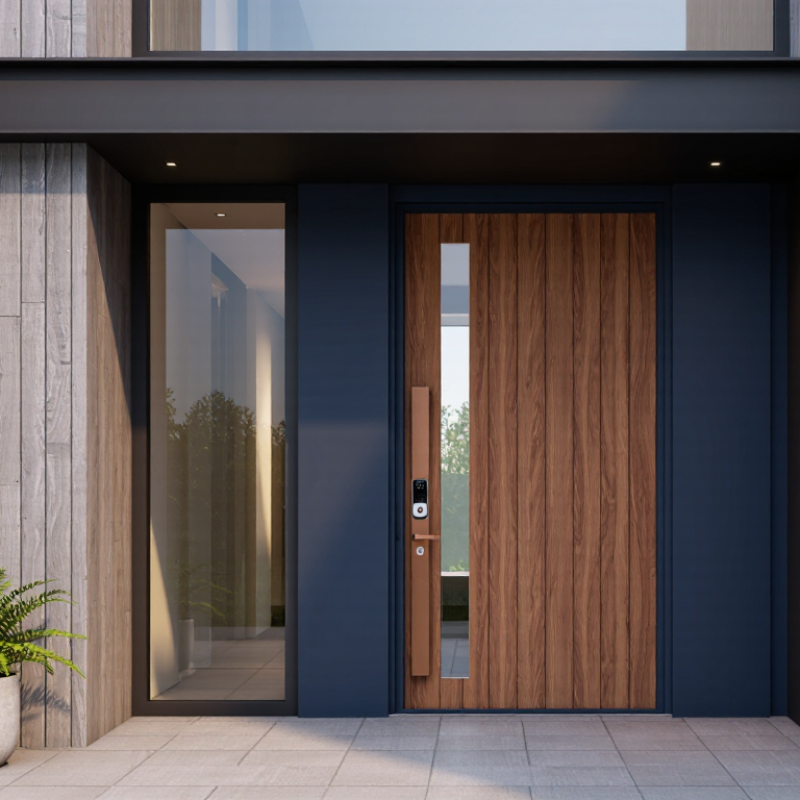
A minimalist front door is defined by proportion, not by a lack of detail. Its form usually favors a clean rectangle, quiet lines, and a balanced relationship with the entryway. Materials bring warmth: a pale oak grain, smooth painted wood, or a restrained metal finish can soften an otherwise spare façade. The aim is calm, not empty. Too much restraint can feel cold; that is worth admitting.
Glazing should feel intentional. A narrow vertical lite can bring daylight into a dim hall while preserving a solid, private appearance. Choose insulated glazing and well-sealed framing, since visible simplicity still depends on careful construction. Hardware works like punctuation: a slim lever or discreet pull keeps the surface uncluttered, while a contrasting finish makes the entry easier to find. The Journal of Light Construction’s 2024 Cost vs. Value report, produced with Zonda, estimated a U.S. steel entry-door replacement at $2,355 in cost and $4,430 in resale value. These are national estimates, not a promise of return; local prices and project details differ.
Tips: Match the door’s finish to one nearby detail, such as a porch light or house number. Check the handle from the sidewalk, not only indoors. Small test. A sample finish can look surprisingly different in direct afternoon sun.
| Design Approach | Form | Materials | Glazing | Hardware | Why It Appeals | Practical Considerations |
|---|---|---|---|---|---|---|
| Solid, flush-panel door | A flat, uninterrupted door face with simple, squared edges and few or no decorative panels. | Common options include painted or stained timber, engineered wood, steel, and fiberglass-reinforced door constructions. | Usually none, creating a more private entrance and a continuous surface. | A discreet lever or pull, simple hinges, and a lock selected to suit the door’s construction. | Its restrained shape works with a wide range of architectural styles and keeps attention on the overall entry composition. | Confirm the door is rated and detailed for exterior exposure. Weather seals and a properly installed threshold help limit drafts and water entry. |
| Vertical-grain timber door | A clean slab or a few broad, aligned boards emphasize vertical proportions rather than ornament. | Timber brings visible grain and natural variation. Exterior suitability depends on species, construction, finish, and maintenance. | May be solid or paired with a narrow glazed panel. | Minimal metal hardware can contrast with the grain without adding visual clutter. | Natural texture adds warmth to a simple form, balancing a pared-back façade. | Timber can respond to moisture and temperature changes. Use an exterior-appropriate finish and follow maintenance guidance for the door system. |
| Door with a narrow glazed sidelight | A simple door leaf is paired with a slim fixed panel beside it, keeping the main door face visually uncluttered. | The door may be timber, steel, or fiberglass-reinforced; the sidelight uses a glazed frame compatible with the assembly. | Clear glass admits more daylight and views; translucent or patterned glass can provide more privacy. | Hardware stays visually simple, with the lock and handle positioned on the door leaf. | Borrowed daylight can brighten an entry without requiring a large glass area in the door itself. | Check privacy, solar exposure, and applicable safety-glazing requirements for the location and installation. |
| Door with a glazed upper panel | A plain lower section is combined with a compact window near the top of the door. | Available in several door constructions; the glazing and frame should be designed for exterior use. | An upper glazed area can admit daylight while reducing direct views at typical eye level. | A straightforward lever, pull, or compatible multipoint locking system preserves the uncluttered look. | It offers a middle ground between a fully solid door and a more extensively glazed design. | Glass type, placement, thermal performance, and local code requirements should be considered together. |
| Full-height glazed entrance | A large, simple glass area sits within a narrow frame or beside a minimal door leaf. | Typically combines glazing with a frame and door material selected for the project’s exposure and structural needs. | Insulating glass units can reduce heat transfer compared with a single pane; performance varies by glass specification and assembly. | Low-profile pulls and carefully integrated locks keep attention on the glazing and frame. | It can connect an entry visually to outdoor space and bring substantial daylight into a foyer. | Balance daylight with privacy, glare, heat gain or loss, and security. Use glazing that meets applicable safety requirements. |
| Minimal door with concealed or integrated hardware | A smooth, restrained face is paired with carefully aligned reveals and a clean transition to the surrounding wall. | Can be made in different exterior door materials; the assembly must still provide appropriate weather resistance. | Optional; glazing may be omitted or kept to a small, deliberate opening. | Flush pulls, simplified handles, or concealed hinges may be used when compatible with the door system. | Reduced visual detail supports a calm façade and makes proportions, shadow lines, and material finish more noticeable. | Concealed hardware and tight reveals require accurate installation, accessible operation, and hardware specified for exterior conditions. |
They make an entrance feel calm and intentional. A smooth dark door against pale siding can be easy to notice without clutter.
Yes, a clean design can make the entry easier to read from the street. It does not guarantee a higher sale price.
Choose a well-sealed finish that suits your climate and cleaning habits. Matte surfaces may hide some fingerprints, but dark doors can show dust.
A 2024 remodeling benchmark estimated a 188.1% cost recoup for steel entry-door replacements. That is context, not a promise. Local costs and buyer demand vary.
Inspect the frame for drafts and make sure the threshold sheds water. Measure the opening, too. Small details matter.
Clear lighting, an easy-to-use handle, and space to approach can help. Measure first; not every home needs a wider opening.
Choose glass that fits your privacy needs, and keep the trim uncluttered. A very bare entry can feel cold.
No. An oversized slab may look awkward on a small façade. I would not choose by resale numbers alone.
Minimalist front door designs are trending in 2026 because they balance a clean, contemporary look with practical performance. Defined by simple geometric forms, restrained colors, large or carefully placed glazing, and understated hardware, these doors make an entry feel welcoming without visual clutter. Homeowners are also drawn to durable, low-maintenance finishes and flexible styles that complement different exterior materials while improving curb appeal.
Choosing the right door involves weighing steel, fiberglass, and wood for durability, security, upkeep, and energy efficiency. NFRC ratings can help compare a door’s U-factor and solar heat gain, offering a clearer picture of how it may affect indoor comfort. What is the latest trend in minimalist front door designs? It is a move toward streamlined doors that pair subtle detailing with dependable insulation and long-lasting materials. As a 2024 benchmark, Zonda reported that steel entry-door replacements recouped 188.1% of their cost, highlighting the potential value of a well-chosen upgrade.

 ScotiaFire Doors