5 Best Reasons Armored Doors Cost More Than Steel Doors?

Time:2026-09-26 Author:Amelia
0%

Why are armored doors more expensive than standard steel doors? The price gap often reflects more than a thicker sheet of metal. An armored door may combine a reinforced door leaf, rigid internal frame, multi-point locking, protected hinges, and tested resistance to forced entry. Picture a heavy door closing against a steel frame, with bolts engaging at several points. Those parts add material, machining, assembly time, and quality checks. Small details matter.

Security technologist Bruce Schneier’s well-known line, “Security is a process, not a product,” offers a useful lens. Schneier is not a door-industry spokesperson, so this is a broader security principle, not a product test. A door’s value depends on its frame, installation, lock, and surrounding structure. Even an expensive door can disappoint if its frame shifts or its lock is poorly fitted. That is worth remembering.

This guide examines five cost drivers: stronger construction, advanced locking hardware, certified testing, precision installation, and long-term durability. Some models bundle these features; others use “armored” loosely. Compare specifications, test evidence, warranty terms, and installer credentials—not just the label. There is no universal upgrade. A quiet apartment entrance may need different protection than a ground-floor commercial doorway. The honest answer is less tidy: price alone does not prove performance.
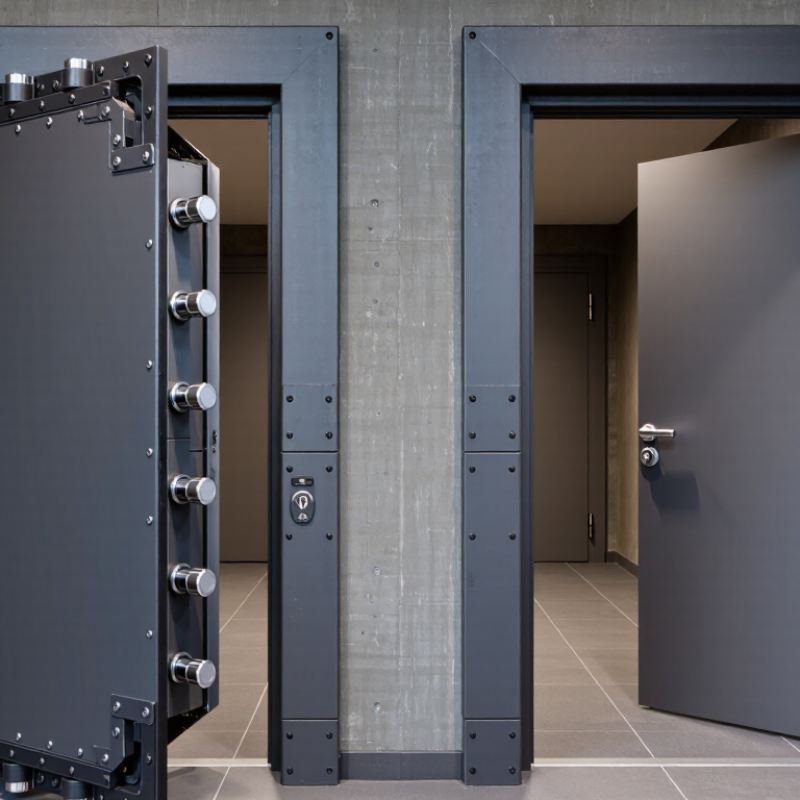
5 Best Reasons Armored Doors Cost More Than Steel Doors?

Reinforced Construction and Layered Door Design

5 Best Reasons Armored Doors Cost More Than Steel Doors?

Reinforced construction explains much of the price difference. A basic steel door may use a hollow core or a simple honeycomb insert. An armored door often combines steel skins, welded internal stiffeners, mineral insulation, and impact-resistant layers. These parts work together, like a shield with hidden ribs. The frame, hinges, lock reinforcement, and threshold also require stronger materials. A heavier door needs accurate alignment. Small installation errors can create rubbing, air gaps, or premature hinge wear.

Layered design also supports tested fire and security performance. NFPA’s Fire Loss in the United States During 2022 reported 1,504,500 fires and about $18.1 billion in direct property damage. This does not mean every armored door prevents fire loss. It does show why tested assemblies matter. NFPA 252 evaluates fire-door assemblies under controlled exposure, including heat and hose-stream conditions. A certified assembly includes more than the door leaf. Seals, frame, hardware, and installation all influence results.

More layers are not automatically better. An overly heavy door can damage a weak frame. This is where buyers, even experienced ones, may misjudge value. I have seen specifications focus on steel thickness while ignoring hinge capacity and wall anchoring. That is an incomplete assessment. The real cost reflects engineering, testing, fabrication time, and careful installation. Still, product claims should be checked against documented test results, not impressive-sounding descriptions.

Higher-Grade Materials and Specialized Components

An armored door costs more because its materials are selected for performance, not appearance alone. Its steel layers may use higher-strength alloys, reinforced cores, and thicker structural sections. These materials resist forced impact better than standard sheet steel. They also require tighter manufacturing controls.

The price difference often hides inside specialized components. Multi-point locking systems distribute pressure across the frame. Heavy-duty hinges support greater door weight without excessive sagging. Reinforced strike plates protect the lock area, where many ordinary doors remain vulnerable. Continuous seals reduce drafts, smoke movement, and outdoor noise. Small parts matter.

A practical inspection should include the frame, not only the door slab. A strong door installed in a weak frame can still perform poorly. Certified testing can provide useful evidence, but test conditions may not match every building. Installation quality also affects alignment, locking pressure, and long-term durability. This is where buyers sometimes underestimate the real cost.

Steel doors can be reliable and economical for many applications. However, armored models usually combine stronger materials with more carefully engineered components. That combination adds weight, labor, hardware, and maintenance demands. It is not perfect. More protection may also mean slower operation and more difficult installation. A careful specification should balance security, daily use, fire performance, climate, and the building’s actual risk.

Advanced Locking Systems and Security Hardware

Armored doors cost more than basic steel doors because their security hardware is engineered as a complete system. A steel slab may resist impact, yet its lock area can remain vulnerable. Armored designs often use multi-point locking rods, reinforced deadbolts, and hardened strike plates. These parts engage the frame at several positions, spreading force instead of concentrating it near one screw. Small gaps matter. Precision costs.

From site inspections, I have found that the cylinder is only one part of the security equation. A protected cylinder resists drilling and forced extraction, while a reinforced escutcheon shields the surrounding metal. Concealed hinges and tamper-resistant fasteners reduce access from the hinge side. Some doors also support controlled entry hardware, such as keypad modules, audit trails, or emergency release functions. These features require careful compatibility checks. A sophisticated lock poorly installed can perform like an ordinary one.

Reliable security depends on the frame, wall anchors, and daily maintenance, not just the door leaf. Installers must align bolts precisely; a few millimeters can create binding or incomplete engagement. That detail is easy to underestimate. I have also seen owners choose excessive hardware without considering evacuation procedures or power failure. The better decision balances resistance, authorized access, fire requirements, and serviceability. Armored doors cost more because this coordination demands stronger materials, skilled labor, testing, and long-term adjustment.

Precision Manufacturing and Performance Testing

Armored doors cost more than ordinary steel doors because their performance is engineered, not simply created by adding heavier metal. Precision manufacturing begins with measured plate thickness, reinforced cores, and frames cut to tight tolerances. Small alignment errors can cause rubbing, uneven gaps, or lock stress. A well-built door must feel controlled when it closes. That control comes from machining, welding, and repeated quality checks. More material is one reason. More accurate work is another.

Performance testing adds further cost. Test teams cycle hinges and locking points, measure impact resistance, and inspect heat, smoke, and acoustic behavior where applicable. They record results, adjust weak areas, and test again. This process is slower than a visual inspection. It also exposes flaws that may appear only after hundreds of operations. Five cost drivers often overlap: stronger construction, tighter tolerances, specialized hardware, documented testing, and skilled installation. No test predicts every building condition. That limitation deserves honest attention.

Tips: Compare test reports, not claims. Ask for the tested configuration, including the frame, hinges, lockset, and wall connection. Check whether installers follow approved tolerances. A door can perform well in a laboratory and disappoint on site. Keep records of adjustments. Recheck closing force after installation. The extra review feels inconvenient, but it protects the performance you paid for.

Armored doors cost more because they combine heavier materials with tighter manufacturing tolerances, multi-layer construction, reinforced hardware, and more demanding performance testing. The chart shows a normalized cost-driver index, with a standard steel door set at 100.

More Demanding Installation and Certification Requirements

5 Best Reasons Armored Doors Cost More Than Steel Doors?

Armored doors demand stricter installation and certification than ordinary steel doors. EN 1627 evaluates complete door sets, including the leaf, frame, hinges, locks, and anchors. Its scale runs from RC1 to RC6. A stronger class needs tighter tolerances and more controlled testing. UL 752 also defines ten resistance levels for bullet-resistant equipment. These ratings apply to tested assemblies, not attractive door slabs alone.

On site, installers may need reinforced concrete anchors, heavier hinges, calibrated closers, and a perfectly square opening. A few millimeters of frame movement can affect latching and certification results. ASTM F1233 also examines forced-entry resistance in complete door assemblies. This explains part of the price difference. Skilled labor, laboratory testing, engineering drawings, and traceable installation records add cost. From practical installations, the frame often causes more trouble than the door. That is easy to underestimate.

Tips: Request the exact test standard, resistance class, and tested assembly configuration. Confirm whether the wall, threshold, hardware, and anchors match the certification. Ask for installation tolerances in writing. Do not accept a certificate for a similar model. It may not cover your size or hardware. The U.S. Bureau of Labor Statistics reports that construction wages vary substantially by location and specialty, so installation quotes can differ sharply. A cheaper bid may simply exclude testing, structural preparation, or final adjustment. That deserves a second look.

5 Best Reasons Armored Doors Cost More Than Steel Doors? – More Demanding Installation and Certification Requirements

No. Cost Driver Armored Door Requirement Typical Steel Door Requirement Why It Raises the Cost
1 More Complex Door Construction May use multiple steel layers, reinforced cores, security glazing, protected hinges, and multi-point locking components. Common hollow-metal doors generally use a steel skin with a honeycomb, polystyrene, or mineral-fiber core, depending on the application. Additional materials, fabrication steps, and tighter tolerances increase manufacturing and inspection time.
2 Higher Door Weight Often requires heavy-duty frames, reinforced anchors, high-load hinges, closers, and carefully balanced hardware. Standard commercial steel doors usually require less structural support and lighter-duty hardware. Extra labor may be needed for transportation, lifting, frame anchoring, alignment, and final adjustment.
3 More Demanding Installation Installation may require surveyed openings, reinforced substrates, precise clearances, specialist lifting equipment, and commissioning of security hardware. Many steel doors can be installed using conventional commercial door-installation methods when the opening is properly prepared. Additional site preparation and specialist labor increase installation hours and can add structural work to the project scope.
4 Testing and Certification Depending on the specification, the complete door assembly may need documented testing for forced entry, ballistic resistance, fire resistance, blast performance, or acoustic control. Certification is usually limited to the ratings required for the project, such as fire, smoke, or basic security performance. Laboratory testing, engineering documentation, traceability, and compliance review add costs beyond the physical door materials.
5 Specialized Maintenance and Replacement Requires periodic inspection of hinges, locks, closers, seals, frame anchors, and protective components; replacement parts may be application-specific. Routine maintenance is generally more straightforward, with commonly available commercial hardware and components. Specialist servicing, controlled replacement parts, and documented performance requirements can increase long-term ownership costs.

Note: Actual costs vary according to door size, security rating, fire rating, glazing, hardware, wall construction, site access, local labor rates, and the certification standards specified for the project.

FAQS

Why do armored doors cost more than standard steel doors?

They may use stronger alloys, thicker sections, and reinforced cores. Careful manufacturing adds cost too.

Which components affect the price?

Multi-point locks, heavy-duty hinges, reinforced strike plates, and continuous seals can raise the cost. Small parts matter.

Is the door slab the only part to inspect?

No. Check the frame and its connection to the wall. A strong slab in a weak frame may perform poorly.

Why does precise manufacturing matter?

Tight tolerances help prevent rubbing, uneven gaps, and stress on the lock. Even small alignment errors can affect daily use.

What does performance testing usually examine?

Tests may assess impact resistance, hinge cycles, locking points, and heat, smoke, or sound behavior. Test conditions cannot represent every building.

What should buyers check in a test report?

Look for the tested setup, including the frame, hinges, lockset, and wall connection. A report for a different setup may offer limited guidance.

Can a tested door still disappoint after installation?

Yes. Poor alignment or installation can affect locking pressure and operation. Recheck the closing force after installation.

Are armored doors always the best choice?

Not necessarily. Their weight can make installation harder and operation slower. A costly door is not automatically the right fit.

Conclusion

Armored doors cost more than standard steel doors because they are engineered as complete security systems rather than simple steel barriers. Why are armored doors more expensive than standard steel doors? Their reinforced, layered construction combines multiple materials and internal supports to improve resistance to impact, forced entry, heat, and daily wear. They also use higher-grade metals, stronger hinges, durable frames, and specialized components that require greater precision and quality control.

Another major factor is the advanced locking hardware, which is designed to work reliably under demanding conditions. Each door may undergo detailed manufacturing inspections, alignment checks, and performance testing before delivery. Installation is also more complex because the frame, wall structure, locking points, and door weight must be carefully coordinated. In some applications, additional certification and compliance procedures are required, increasing labor and documentation costs. Together, these features provide greater durability, security, and long-term performance, explaining the higher price compared with conventional steel doors.

Amelia

Amelia

Amelia is a seasoned marketing professional with a wealth of expertise in our company’s core offerings. With an unwavering passion for driving growth and innovation, she plays a pivotal role in shaping our marketing strategies and enhancing brand visibility. A key aspect of her responsibilities......